Quartersawn White Oak Rough Lumber Priced per board foot
Quartersawn White Oak Appalachian · ray-fleck · board feet
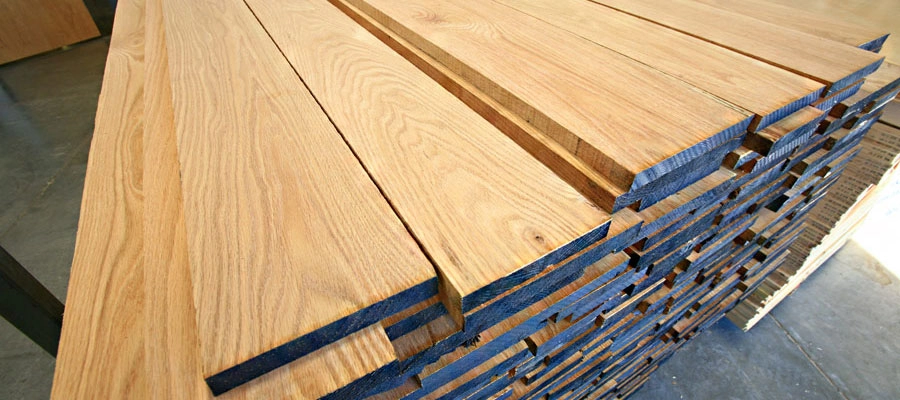
Appalachian White Oak (Quercus alba), quartersawn
Bright silver ray flake — the “tiger oak” figure
One of the most stable oak cuts
Closed pore — naturally rot-resistant
Janka hardness ~1,350
Kiln-dried to 6–8% MC
Select thickness
✔ Same quality used in our production
✔ #1 Common and better grade
✔ Ships nationwide in 1–2 weeks
Configure.
Quartersawn White Oak Lumber — Ray-Fleck “Tiger Oak,” Priced per Board Foot
Quartersawn White Oak is the same Appalachian White Oak we build our doors and shutters from — Quercus alba — cut radially so the saw crosses the wood’s medullary rays and throws them across the face as bright silver flake. That flash of figure is the “tiger oak” that defined Arts & Crafts and Mission furniture. Buy it by the board foot — select thickness and milling, enter the quantity you need, and add to cart.
Choose Rough Sawn for shop stock you’ll mill yourself. Choose S4S for boards surfaced to 150-grit and ready to use. Choose S2S for face-surfaced material you’ll joint yourself.
About Our Quartersawn White Oak
Appalachian White Oak (Quercus alba), quartersawn for dramatic ray fleck
The “tiger oak” flake that is the signature of Stickley-era Arts & Crafts and Mission work
One of the two most dimensionally stable oak cuts — moves far less than flatsawn across its width
Same closed, tyloses-plugged pores as flatsawn White Oak — naturally rot-resistant and exterior-grade
Janka hardness ~1,350 — noticeably harder than Red Oak
Kiln-dried to 6–8% moisture content, #1 Common and better, 4/4 through 10/4
Quartersawn stock is premium because, like rift, the yield per log is low. It is the cut to specify when you want figure and stability together. Call 412.641.0177 for wide boards or truckload quantities.
Quartersawn White Oak at a Glance
The technical properties builders and furniture makers ask about for quartersawn American White Oak (Quercus alba) — the ray-fleck “tiger oak” cut.
Botanical name
Quercus alba — family Fagaceae; “quartersawn” describes the cut, not a different species
The cut
Sawn radially so the blade crosses the medullary rays, exposing them as bright flake across the face
Also known as
Tiger oak, quartered oak, flake oak, comb-grain oak
Where it grows
Native to the eastern United States and southeastern Canada; our stock is Appalachian
Average dried weight
~47 lbs/ft³ (755 kg/m³) — heavy
Density (specific gravity)
~0.75 — dense hardwood, denser than Red Oak
Janka hardness
~1,350 lbf (5,990 N) — hard; harder and denser than Red Oak
Rot & insect resistance
Very durable — heartwood pores are plugged with tyloses, essentially watertight, exterior-grade
Grain & figure
Straight background grain overlaid with dramatic silver ray flake — the defining “tiger oak” figure
Color
Light to medium golden brown, the flake often paler and iridescent; sapwood nearly white
Stability
One of the two most stable oak cuts (with rift) — moves far less across its width than flatsawn
Machinability
Machines well for so hard a wood; reacts with iron in moisture to leave blue-black stains — use stainless or coated fasteners
Paintability
Almost always finished clear or fumed/stained to show the flake — painting hides the figure you paid for
Best for
Arts & Crafts / Mission furniture, fine cabinetry, wainscot, figured flooring
Sustainability
Abundant and sustainably harvested; not listed or threatened
The Story of Quartersawn White Oak
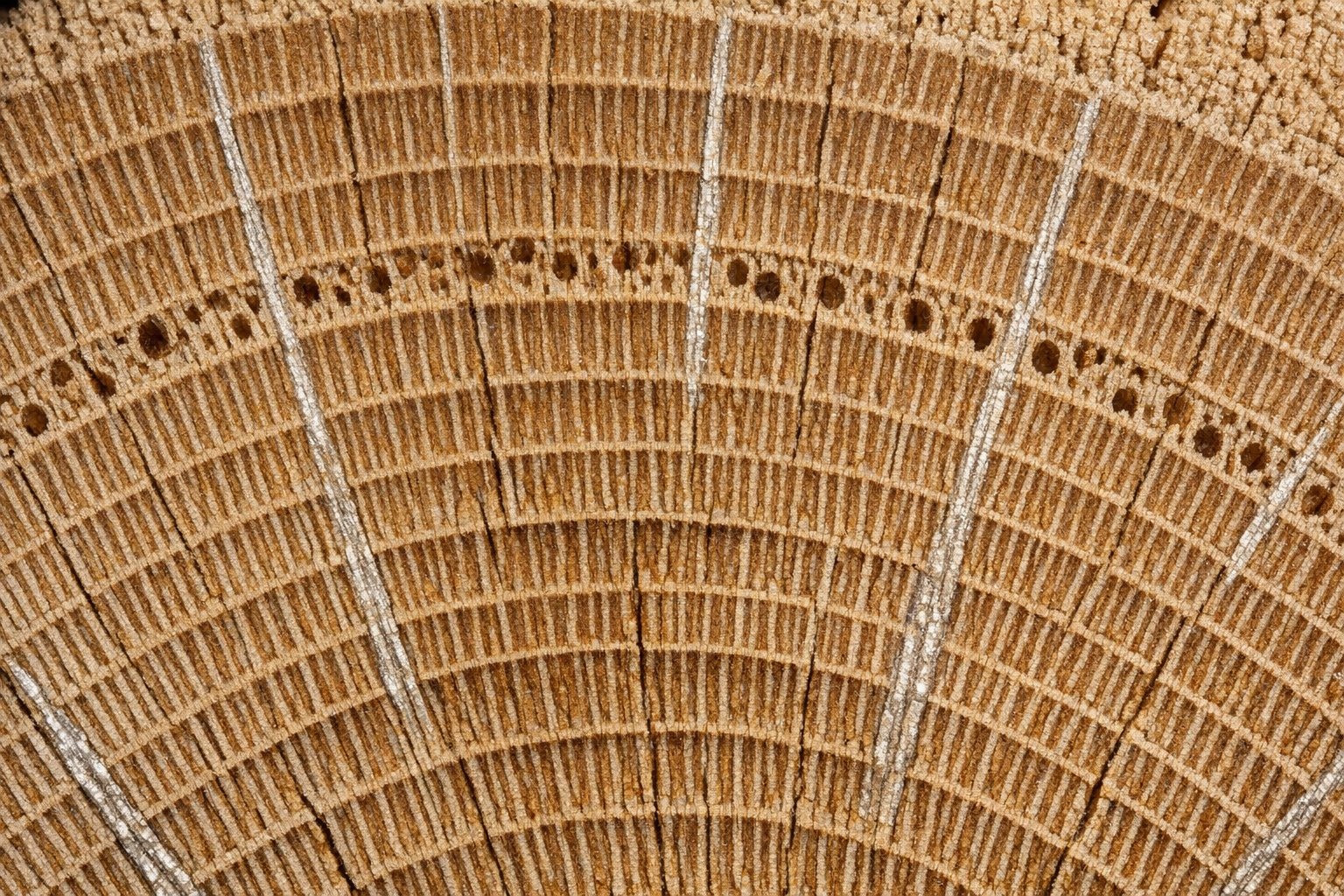
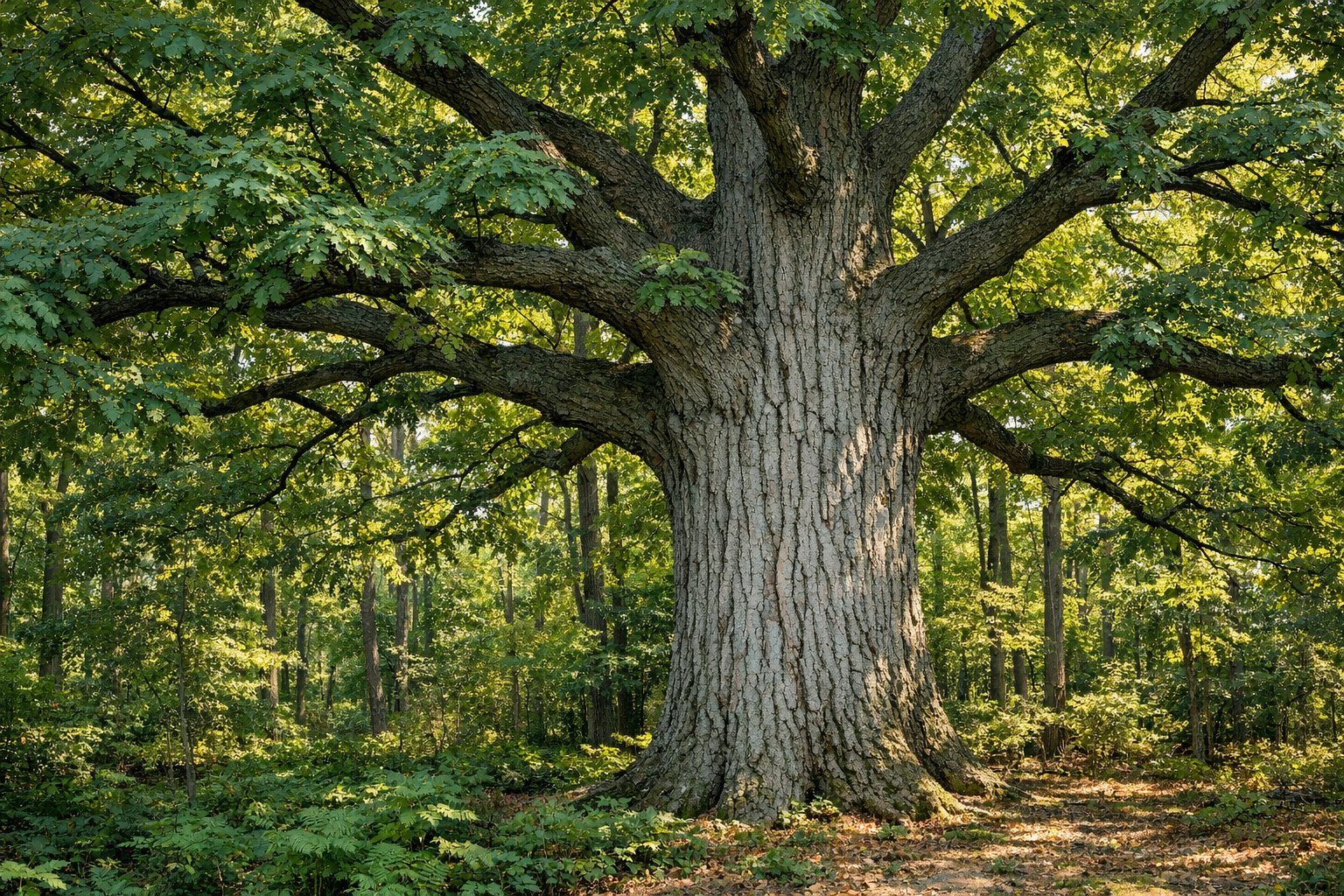
The living tree — Quercus alba. Quartersawn is a radial cut of this white oak that reveals the rays.The quartersawn cut — the blade crosses the medullary rays and exposes them as shimmering flake.
Quartersawn White Oak is the wood that a whole design movement was built on. It is Quercus alba — the same closed-pore oak of the eastern United States — but cut radially: the log is quartered and sawn so the blade runs across the tree’s medullary rays. Those rays, sheets of cells that radiate out from the center like spokes, show up on the finished face as bright, shimmering flake. Woodworkers call the effect ray fleck, or simply “tiger oak.”
The wood of Arts & Crafts
When Gustav Stickley and the Arts & Crafts makers wanted furniture that looked honest, solid and unmistakably American, they reached for quartersawn White Oak and often fumed it with ammonia to a deep brown that made the flake glow. Mission and Craftsman pieces, church pews, library tables and Stickley chairs are quartersawn oak; the figure is the signature of the entire style.
Figure and stability in one cut
The ray flake is not just decorative — exposing the rays is a byproduct of radial sawing, and radial sawing is what makes quartersawn (and rift) oak the most dimensionally stable cuts. So a quartersawn board gives you dramatic figure and minimal movement at the same time, which is exactly why it is prized for wide panels and doors that must stay flat.
Where it grows & how we source it
White Oak ranges across the eastern United States from the Appalachians to the Midwest and up into southeastern Canada. We buy Appalachian stock — the slow, cool mountain growth gives tighter, straighter grain than southern or western oak, which is exactly what you want when the whole point of the board is a clean, even field of flake.
Working with it
It is White Oak through and through: hard (~1,350 Janka), heavy, strong and rot-resistant, and reactive to iron — use stainless or coated fasteners. It is nearly always finished clear, fumed or stained rather than painted, because the whole reason to buy quartersawn is to see the flake.
What Builders Make from Quartersawn White Oak
Arts & Crafts and Mission furniture — the ray-fleck figure is the whole point of the style
Fine cabinetry and doors — stable panels and stiles with dramatic flake
Wainscot and paneling — flake reads beautifully across a wide field
Flooring — figured, stable, and iron-hard underfoot
Exterior joinery — White Oak’s rot resistance with quartersawn stability
Quartersawn White Oak — Common Questions
What is quartersawn White Oak, or “tiger oak”?
Quartersawn is a cut of White Oak (Quercus alba), not a separate species. The log is quartered and sawn radially, so the blade crosses the wood’s medullary rays and exposes them as bright silver flake across the face — the dramatic “tiger oak” figure that defines Arts & Crafts and Mission furniture.
What is the difference between quartersawn and rift White Oak?
Both come from radial sawing and both are very stable, but they differ in how the saw meets the rays. Quartersawn crosses the rays and shows bold flake; rift is cut to avoid the rays and shows only straight grain with no fleck. Choose quartersawn for figure, rift for a quiet, linear look.
Why is quartersawn White Oak more expensive than flatsawn?
Yield. Radially sawing a quartered log recovers far fewer board feet than flatsawing, so quartersawn stock costs more per board foot. You are paying for the figure and the stability, not a different wood — it is the same Quercus alba.
Is quartersawn White Oak stable?
Very. Along with rift, it is the most dimensionally stable oak cut: because the growth rings run nearly perpendicular to the face, it expands and contracts far less across its width than flatsawn, so wide panels and doors stay flat.
How is quartersawn White Oak sold and priced?
By the board foot, kiln-dried to 6–8% moisture, #1 Common and better, in 4/4, 8/4 and 10/4 thicknesses, rough sawn, S2S or S4S. One board foot is 144 cubic inches (a 12×12×1″ board). Wide, heavily-figured, and truckload volumes are quoted on request.
What furniture is made from quartersawn White Oak?
It is the classic wood of Arts & Crafts, Mission and Craftsman furniture — Stickley chairs and tables, church pews, library and trestle tables — as well as fine cabinetry, wainscot and figured flooring. The ray flake is the signature of the entire style.
Can quartersawn White Oak be used outdoors?
Yes — it is White Oak, so the tyloses-plugged heartwood pores make it naturally rot-resistant and essentially watertight, and the quartersawn cut adds maximum stability. It is excellent for exterior doors and joinery, though many builders reserve figured stock for interior show work.
Should quartersawn White Oak be stained or painted?
Almost never painted — paint hides the flake you paid for. It is finished clear, stained, or traditionally fumed with ammonia (the Arts & Crafts method) to a rich brown that makes the ray fleck glow. Use stainless or coated fasteners, since White Oak reacts with iron and leaves blue-black stains.
Call 412.641.0177 with questions or custom quantity requests.