
Sapele Mahogany Doors and Shutters
Published: November 15, 2021
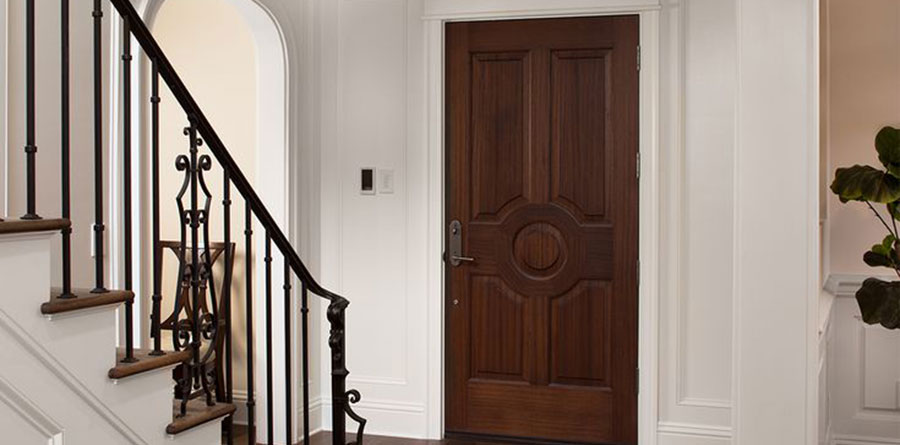
It can be a tall task when it comes to choosing a wood species for you new wood doors or wooden shutters. Some of the more popular exterior hardwoods such as Mahogany and Cedar are frequently used because of their ability withstand the elements and still look beautiful. However there is another option with a similar appearance to Mahogany and is very sustainable.
What is Sapele Wood?
Sapele is a large hardwood tree with trunks that exceed 6 feet in diameter that naturally has a widespread growth range across Africa. Sapele is commonly known as an exterior hardwood and much harder than much of the typical exterior woods like Cedar and Cypress. It is a wood of medium hardness and is harder than most domestic North American Species and almost twice as hard as Genuine Mahogany. Additionally Sapele grows with an interlocking grain pattern where the fibers twist around the tree as they grow. While the grain pattern is still moving in the same direction, the interlocking pattern acts to cancel out a lot of movement that is typically found across the grain. This hardness and medium density as well as propensity for straight grained boles makes Sapele wood very stable and predictable from the moment it is felled to when it is pulled from a drying kiln.
Sapele lumber is often marketed as a type of African Mahogany and in some ways this is true since Sapele is in the Mahogany family. However there are several species that get lumped under the African Mahogany name. Mahogany tends to get thrown onto all kinds of things to make them more luxurious or expensive so Mahogany Sapele and Sapele Mahogany are names that show up quite a bit in trade manifests and architectural specifications.
Sapele is denser and nearly twice as hard than Mahogany and not all of the Mahogany labeled species behave as well and they vary dramatically in density, color, and stability. However, the comparison to Mahogany as an outstanding exterior grade wood that has rich reddish-brown heartwood holds true. Sapele is most often used as a window and door material because it is so stable and almost completely rot and weather resistant. The grain and pore structure is tighter than Genuine Mahogany so making Sapele great for painting. Sapele Mahogany is definitely the cream of the crop when it comes to African Mahogany like hardwoods.
Sapele for Doors and Shutters
We love Sapele for doors and shutters, its charming red toned brown color offers unique aesthetics to the home in comparison to other hardwoods. One of the many benefits of its color is how well it pairs beautifully with a range of brickwork styles. Using a consistent color palette in your exterior home design can provide a sophisticated premium look to your home. Sapele doors and shutters are low-maintenance and last a long time because of its density and durability.
Build your new Custom Millwork and get a Free Instant Quote Today
Our state of the art designers allow you to design and build completely customized millwork to fit your exact needs.
Questions or concerns contact us contact us or via 412.641.0177 .
Build an Instant QuoteGet Started Designing Your New Wooden Shutters Today!
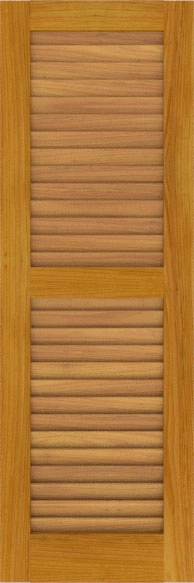
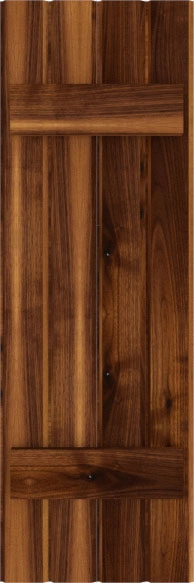
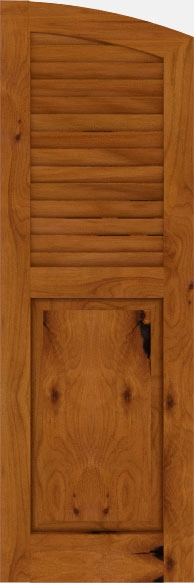
Choosing the Right Wood Shutters for Your Home
Selecting exterior wood shutters involves balancing aesthetics, durability, and climate suitability. Homeowners in coastal regions often gravitate toward Spanish Cedar or Cypress for their natural resistance to moisture, decay, and insect damage. In northern climates, Western Red Cedar and White Oak provide excellent dimensional stability through freeze-thaw cycles.
Proper installation is just as important as material selection. Functional shutters should be mounted with stainless-steel or galvanized hardware to prevent corrosion staining on the wood or siding. Each shutter panel should be sized to cover exactly half the window opening when closed, creating a tight, weather-resistant seal. Estate Millwork builds every shutter to your exact window measurements, ensuring a precise fit without field modifications.
Maintenance requirements vary by species and finish. Unfinished cedar will weather to a silver-gray patina over several years, which many homeowners find attractive. If you prefer a painted finish, a high-quality exterior primer followed by two coats of acrylic latex paint will protect the wood for eight to ten years before recoating. Stained shutters should be refreshed every three to five years depending on sun exposure. Regardless of finish, periodic inspection of shutter hardware and tightening of mounting screws will keep your shutters operating smoothly for decades.
Ready to design your own custom wood shutters? Estate Millwork offers a wide range of styles and wood species, all crafted in our Pennsylvania workshop using traditional mortise-and-tenon joinery.
Need Help?
Build this door to your exact size
Estate Millwork has built custom solid hardwood doors in Pennsylvania for over 20 years — any size, 12 wood species, no standard-size compromises. Price and preview yours online in minutes.
Custom Mahogany Doors → Browse every door style Talk to us @ 412.641.0177
Related Reading
Bring the Farmhouse Look into your Kitchen: An In-Depth Look
Build Your Dream House: Custom Bifold Doors Can Complete a Room
Closet Barn Doors: Can Barn Doors Be Used for Closets?
Choosing Closet Doors: Expert Tips
Choosing the Best Wood for your Exterior Front Door: Expert Tips
Choosing your Interior Door Style