
Instant Curb Appeal with Wooden Planters: An In-Depth Look
Published: August 27, 2020
When facing the issue of space for a flower or vegetable garden you may have wondered if it was possible to have such gardens. Wooden garden planters are great for areas like this and come in all shapes and sizes and add instant curb appeal to your home. Your balcony or front porch can be potential locations for your garden and even better yet planter boxes deter weeds and help avoid soil related issues like insects and diseases.
Setting up your Wooden Garden Planter
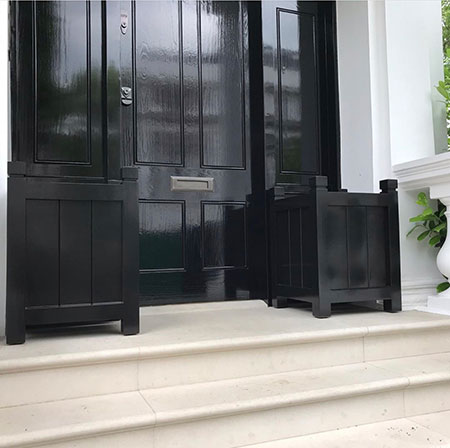
First you want to select the location where you would like to setup the wooden planter, then measure out the space available. If growing vegetables you'll want to choose an area that receives at least 6 hours of sun a day. After this is done, you'll want to purchase a wooden planter to fit your space and needs. The bigger the planter the more space to plant. Once you have your planter place it in the desired location, if outside you will want to drill a few holes in the bottom if there aren't any already to allow for drainage. We also find it optimal to place a few rocks around these holes before filling with dirt so they do not become clogged. If transplanting plants from nursery pots we find it easier to only partially fill the planter with potting soil and then fill in around the plants after they have been placed. If planting from seed fill the planter with potting soil to the desired level and then sow the seeds you wish to grow. Once things are planted, give the planter a good watering to saturate the soil, we usually water at this stage until we can see water coming out of the bottom of the planter. Once your planter is setup we recommend watering every day or whenever the soil appears to be dry and fertilize every one to two weeks depending on wooden planter size and number of plants in the planter. The smaller planter or more plants in the planter the more often you should water and fertilize as there is less soil there will be fewer nutrients available
Placing your Garden Planter
When deciding on where to put your new wooden garden planter, because garden planters cna get heavy once the soil is added look for a place where it won't need to be moved or moved very little, but most importantly fin somewhere it can be viewed and appreciated. Wooden planters can be placed on porches, patios, decks, in an existing garden to give more dimension, if you can think of a place around your house you can probably place a wooden garden planter there.
Maintaining your Wooden Planter
Since there is less soil and usually more plants per square inch of available soil, you will need to water and fertilize more often than you would with plants in the ground. Watering can be done once a day or every other day depending on the weather and how fast the soil dries out. As for the plants you will want to prune and remove dead or spent blooms regularly to allow the plants to produce new beautiful blooms to keep your planter looking full and beautiful throughout the season.
Build your new Custom Millwork and get a Free Instant Quote Today
Our state of the art designers allow you to design and build completely customized millwork to fit your exact needs.
Questions or concerns contact us contact us or via 412.641.0177 .
Build an Instant QuoteWhy Custom Millwork Makes a Difference
Mass-produced doors, shutters, and cabinets are built to standard dimensions using the fastest possible construction methods. Custom millwork takes the opposite approach: every piece is built to your exact measurements using time-tested joinery techniques that have proven themselves over centuries. The result is a product that fits perfectly, operates smoothly, and lasts for generations rather than years.
Estate Millwork builds every product in our Pennsylvania workshop using traditional mortise-and-tenon joinery. This technique interlocks the rails and stiles with precisely cut joints reinforced by hardwood dowel pins, creating a mechanical bond that does not rely solely on adhesive. Unlike pocket-screwed or biscuit-joined alternatives, mortise-and-tenon joints actually strengthen over time as the wood fibers compress and lock together.
Our manufacturing process begins with hand-selected, kiln-dried lumber graded for architectural appearance. Each board is inspected for grain pattern, color consistency, and structural integrity before entering production. CNC machinery cuts joints to thousandth-of-an-inch tolerances, and skilled woodworkers assemble, sand, and inspect every piece before it ships. This combination of modern precision and traditional craftsmanship is what separates custom millwork from stock alternatives.
Explore our product lines and design something uniquely yours:
Need Help?
Related Posts
Interior Cabinet Door Styles That Elevate Your Kitchen Or Bathroom
Published: November 12, 2025
Why Mortise & Tenon Joinery Still Matters in Millwork
Published: October 23, 2025
From Shaker To Raised Panel: Cabinet Door Styles That Transform Your Home
Published: October 08, 2025
How to Match Door & Shutter Styles for a Cohesive Home Design
Published: September 30, 2025
Choosing the Right Exterior Shutters: Louvered, Board & Batten, Bahama, and More
Published: September 25, 2025
The Warmth Of Wood: Barn Doors Tailored To Your Home
Published: September 09, 2025
Classic Style, Modern Strength: Custom Wooden French Doors
Published: September 03, 2025
Built By Hand, Designed To Last: Custom Wood Louvered Doors
Published: July 07, 2025
Flat Panel Shutters For Colonial, Craftsman, And Farmhouse Styles
Published: May 28, 2025
Bring Old-World Charm Home With Custom Wooden Louvered Shutters
Published: May 04, 2025