
Finishing Exterior Wood Shutters: Maintenance Tips
Published: September 03, 2020
Priming Wood Shutters
Preparation
Exterior wood shutters take a beating from the elements, that.s why we take special care with our factory finishes to make sure that your shutters will have a long life of trouble free use. After each custom shutter is completed, it is machine sanded, and then hand sanded to prepare the surface for the final finish. After inspection and hand sanding, the shutters are blown off with high pressure compressed air and moved to our environmentally controlled paint rooms.
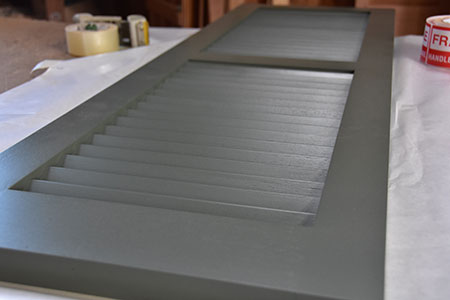
Priming
Most exterior wood shutters are made from cedar, and depending upon the species that is being used, cedars have a high level of tannic acid that is ideal for preventing fungus, mold and insect activity, but can be create difficulties in painted finishes. As such, we use a specially formulated oil based primer that has stain blocking features. The primer is designed to be absorbed into the wood grain and to give an excellent surface for the finish coats of paint.
Scuffing
After the shutter has been primed, the primer.s action will slightly raise the grain of the wood as it is absorbed into the dry wood fibers. The next step in our process is to lightly scuff sand all surfaces of the shutter to remove the raised grain, and to provide a flat smooth surface for the optimal adhesion of the top coat. After the scuffing, the shutters are again cleaned with high pressure air before moving into the painting process.
Note: For customers who are ordering shutters factory primed, but who plan on applying the top coat on-site, Estate Millwork does not scuff sand the shutters prior to shipping. This allows the shutter to remain sealed for transit, and protects the wood from absorbing moisture which will cause problems later in the life of the shutter. It is a simple matter for the customer to quickly scuff the primer prior to painting. Each primed shutter will be carefully wrapped prior to shipment.
Painting Wood Shutters
Post Priming
After each wood shutter has been factory primed by our quality process, the shutter is re-inspected and scuff sanded to prepare it for spray application of the top coats. Estate Millwork has specialized fixtures and jigs that enable us to easily apply top quality finishes, and the scuffed shutter is loaded into a fixture in our environmentally controlled, industrially vented spray rooms.
First Top Coat
Estate Millwork uses high quality Sherwin Williams paints for maximum durability, and can match any color from the Sherwin Williams system, or even paint numbers from other manufacturers. We use latex paint because it bonds well to our primer, and has the ability to live and breath with the wood underneath as the various weather elements work against the shutter. The first top coat is applied evenly to the primer and will fill in any of the scratches left by the scuff sanding, and is allowed to air dry for maximum finish quality.
Second Top Coat
After the first top coat is dry, the shutter is given a second top coat that gives the shutter double the protection against the elements. The combination of primer, scuff sanding, and two top coats gives an unmatched finish, and often saves customers the aggravation, expense and space requirements of painting their own shutters. Please contact Estate Millwork to discuss the finishing requirements of your exterior shutters project, and we can help you with all aspects of the process.
Build your new Custom Millwork and get a Free Instant Quote Today
Our state of the art designers allow you to design and build completely customized millwork to fit your exact needs.
Questions or concerns contact us contact us or via 412.641.0177 .
Build an Instant QuoteGet Started Designing Your New Wooden Shutters Today!
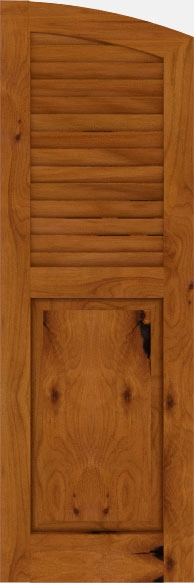
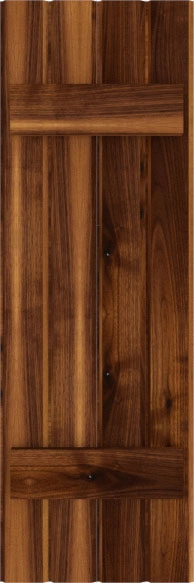
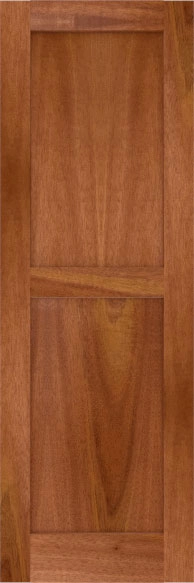
Choosing the Right Wood Shutters for Your Home
Selecting exterior wood shutters involves balancing aesthetics, durability, and climate suitability. Homeowners in coastal regions often gravitate toward Spanish Cedar or Cypress for their natural resistance to moisture, decay, and insect damage. In northern climates, Western Red Cedar and White Oak provide excellent dimensional stability through freeze-thaw cycles.
Proper installation is just as important as material selection. Functional shutters should be mounted with stainless-steel or galvanized hardware to prevent corrosion staining on the wood or siding. Each shutter panel should be sized to cover exactly half the window opening when closed, creating a tight, weather-resistant seal. Estate Millwork builds every shutter to your exact window measurements, ensuring a precise fit without field modifications.
Maintenance requirements vary by species and finish. Unfinished cedar will weather to a silver-gray patina over several years, which many homeowners find attractive. If you prefer a painted finish, a high-quality exterior primer followed by two coats of acrylic latex paint will protect the wood for eight to ten years before recoating. Stained shutters should be refreshed every three to five years depending on sun exposure. Regardless of finish, periodic inspection of shutter hardware and tightening of mounting screws will keep your shutters operating smoothly for decades.
Ready to design your own custom wood shutters? Estate Millwork offers a wide range of styles and wood species, all crafted in our Pennsylvania workshop using traditional mortise-and-tenon joinery.
Need Help?
Related Posts
Interior Cabinet Door Styles That Elevate Your Kitchen Or Bathroom
Published: November 12, 2025
Why Mortise & Tenon Joinery Still Matters in Millwork
Published: October 23, 2025
From Shaker To Raised Panel: Cabinet Door Styles That Transform Your Home
Published: October 08, 2025
How to Match Door & Shutter Styles for a Cohesive Home Design
Published: September 30, 2025
Choosing the Right Exterior Shutters: Louvered, Board & Batten, Bahama, and More
Published: September 25, 2025
The Warmth Of Wood: Barn Doors Tailored To Your Home
Published: September 09, 2025
Classic Style, Modern Strength: Custom Wooden French Doors
Published: September 03, 2025
Built By Hand, Designed To Last: Custom Wood Louvered Doors
Published: July 07, 2025
Flat Panel Shutters For Colonial, Craftsman, And Farmhouse Styles
Published: May 28, 2025
Bring Old-World Charm Home With Custom Wooden Louvered Shutters
Published: May 04, 2025