
5 Things to Consider When Choosing Hardwood Lumber: Expert Tips
Published: February 08, 2023
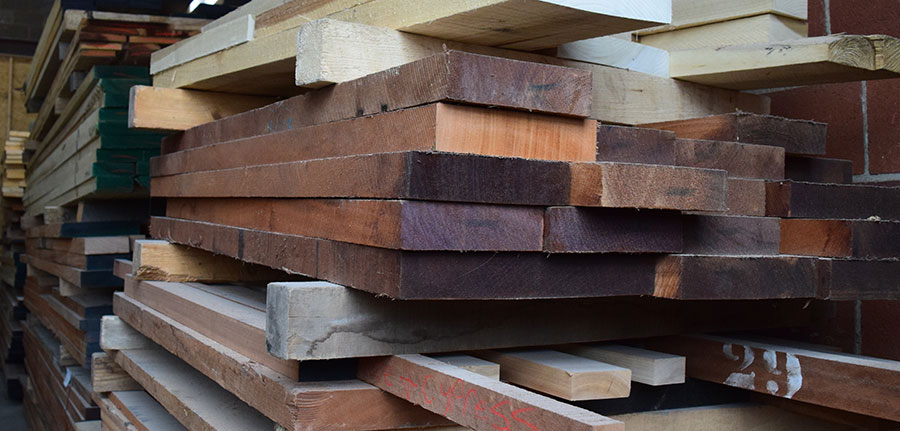
Choosing the right hardwood lumber for your project can be a daunting task. With so many options available, it can be difficult to know where to start. To help make the process easier, we've compiled a list of 7 things to consider when choosing hardwood lumber. From the species of wood to the grade and moisture content, these factors will play a significant role in the overall quality and appearance of your finished project.
Shop Dimensional Hardwood Lumber
Species of Wood: One of the most important considerations when choosing hardwood lumber is the species of wood. Different types of hardwood have unique characteristics that make them suitable for different projects. For example, Oak is known for its durability and resistance to wear, making it an ideal choice for flooring. Maple, on the other hand, is known for its fine, uniform texture and is commonly used in cabinetry and furniture. Before making a decision, research the different species of hardwood available and determine which one is best suited for your project.
Moisture Content: The moisture content of hardwood can also have a significant impact on the stability and durability of the finished product. Hardwood with a moisture content that is too high can warp, twist, or split, while hardwood with a moisture content that is too low can become brittle and crack. To ensure that the hardwood you choose is stable and durable, make sure to determine the moisture content and select hardwood that falls within the appropriate range for your project.t.
Lumber Width and Length: The width and length of hardwood can also play a significant role in the overall quality and appearance of the finished product. Carefully consider the size and scale of your project and select the appropriate width and length of hardwood.
Color and Grain: The color and grain of the hardwood can also play a role in the overall quality and appearance of the finished product. Consider the look you're trying to achieve and select the color and grain of hardwood that is best suited for your project.
Price and Availability: Finally, consider the price and availability of the hardwood you're considering. While some species of hardwood may be more expensive or harder to find than others, it's important to choose a hardwood that fits within your budget and is readily available for your project.
In conclusion, choosing the right hardwood lumber for your project can seem like a daunting task, but by considering these 7 factors, you can be sure that you're selecting the best possible option for your project. Take the time to carefully research and consider each factor to ensure the best possible outcome for your project.
Build your new Custom Millwork and get a Free Instant Quote Today
Our state of the art designers allow you to design and build completely customized millwork to fit your exact needs.
Questions or concerns contact us contact us or via 412.641.0177 .
Build an Instant QuoteSelecting Quality Hardwood Lumber for Your Project
Whether you are building furniture, trimming out a room, or crafting custom millwork, the quality of your lumber determines the quality of the finished product. Estate Millwork supplies kiln-dried dimensional lumber in species selected specifically for architectural and furniture-grade applications. Kiln drying reduces moisture content to eight to twelve percent, which minimizes warping, cupping, and cracking after installation.
Mahogany is the flagship lumber species for exterior applications. Its interlocking grain pattern resists splitting, its natural oils deter insects and rot, and it machines to a glass-smooth finish. For exterior trim, deck railings, and boat building, Mahogany delivers performance that justifies its premium price. Spanish Cedar shares Mahogany's workability and weather resistance at a lighter weight, making it preferred for large-panel applications like shutters and doors.
Domestic hardwoods cover the full spectrum of interior projects. Red Oak and White Oak provide strength and visible grain for flooring, stairs, and paneling. Cherry and Walnut are prized for furniture and cabinetry where natural color and figure are the primary design elements. Maple is the hardest common domestic species, ideal for cutting boards, countertops, and high-wear surfaces. Poplar is the versatile utility player: easy to machine, stable, and affordable for painted trim and millwork.
Shop dimensional lumber by species:
Need Help?
Related Posts
Interior Cabinet Door Styles That Elevate Your Kitchen Or Bathroom
Published: November 12, 2025
Why Mortise & Tenon Joinery Still Matters in Millwork
Published: October 23, 2025
From Shaker To Raised Panel: Cabinet Door Styles That Transform Your Home
Published: October 08, 2025
How to Match Door & Shutter Styles for a Cohesive Home Design
Published: September 30, 2025
Choosing the Right Exterior Shutters: Louvered, Board & Batten, Bahama, and More
Published: September 25, 2025
The Warmth Of Wood: Barn Doors Tailored To Your Home
Published: September 09, 2025
Classic Style, Modern Strength: Custom Wooden French Doors
Published: September 03, 2025
Built By Hand, Designed To Last: Custom Wood Louvered Doors
Published: July 07, 2025
Flat Panel Shutters For Colonial, Craftsman, And Farmhouse Styles
Published: May 28, 2025
Bring Old-World Charm Home With Custom Wooden Louvered Shutters
Published: May 04, 2025